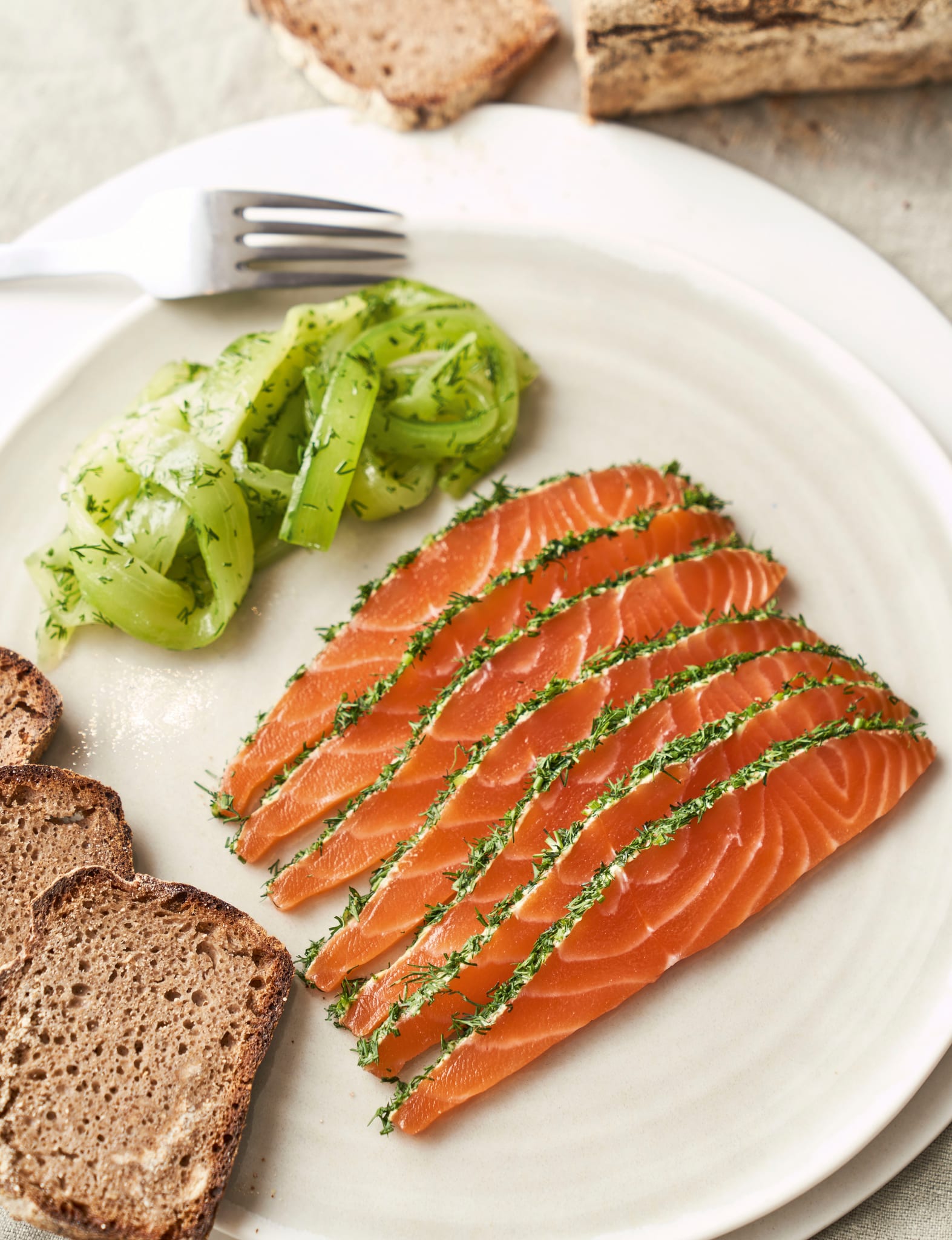
Salmon Gravadlax
A classic of Scandinavian origin, gravadlax epitomises the art of curing. The best-available fresh salmon is pressed with a mix of seasonings, dill and lemon zest. The rest is left mostly to Mother Nature’s ever-dependable cooking tool – time. It can be a special snack on a slice of rye bread, a starter for a lunch or dinner party or a Christmastime treat. The gravadlax and cucumber can be prepared a day ahead or the salmon can be cured and then kept in the freezer until the slicing stage. This recipe is a long-time favourite in the Brasserie Blanc restaurants.
This recipe is from my cookbook: Simply Raymond
Ingredients
For the Salmon Gravadlax
- 1/2 bunchDill, to marinade the salmon
- 1 bunchDill, to finish the salmon
- 1/2Lemon
- 20gSea salt flakes
- 15gcaster sugar
- 1/2 tspWhite pepper, ground
- 500gSalmon, skinless and pin boned
- 1 large tspDijon mustard
For the cucumber salad
- 1Cucumber
- 4 pinchesSea salt flakes
- 2 pinchesWhite pepper, ground
- 2 tbspWhite wine vinegar
- 1/2 bunchDill, leaves picked
- 2 tbspSour cream (optional, but it will add a little extra luxury)
Method
- 1
TO PREPARE Line a baking tray (or roasting tin) with non-pvc clingfilm – enough to wrap the salmon. Finely chop the dill and zest the lemon.
- 2
In a bowl, mix the ½ bunch of dill and the lemon zest with the salt, sugar and white pepper. Sprinkle half this mixture along the centre of the clingfilm, and then place the salmon on top. Now cover the top of the salmon with the rest of the salt mixture, so that both sides of the fish are evenly covered.
- 3
Tightly wrap the clingfilm around the salmon and refrigerate for 24 hours. During this time, the salt mixture extracts the water content from the salmon, creating a wonderful exchange of flavours as the fish is cured. After 24 hours, place the salmon under cold running water to wash away the salt mixture. Pat the salmon dry with kitchen paper. Next (and I’ll let you into a little chef secret), to achieve perfect slices, wrap the salmon in clingfilm once again and transfer to the freezer for 1–1½ hours (or until required). Now it is firm enough to slice perfectly.
- 4
Place the salmon on a chopping board and, using a sharp, thin-bladed knife, cut slices, each about ½cm thick, not all the way through so as to keep the salmon in one piece. To finish, place the salmon on a board lined with clingfilm, leaving an overlap large enough to wrap around the fish. Brush the mustard over the salmon, then scatter over the remaining bunch of finely chopped dill. Wrap the fish tightly in the clingfilm and press the mustard-dill coating firmly into the salmon. Refrigerate for at least 2 hours, so that it has thawed.
- 5
For the cucumber salad, peel the cucumber, halve it lengthways, remove the seeds and slice very finely into ribbons (use a mandolin with a spaghetti attachment, a spiralizer or simply a sharp knife). These strips should be just long enough to wrap around a fork. Add the salt and leave for a minimum of 10 minutes. Drain off the liquid and add the white pepper and vinegar. Before serving, stir in the dill and soured cream, if using.
- 6
Serve the salmon, sliced through, on individual plates or, for a more celebratory touch, place the salmon and cucumber on a large serving dish.
Cooking is always an expression of care and generosity. Enjoy this dish.
Bon appétit!